









posted on July 1, 2008 - 2:00pm
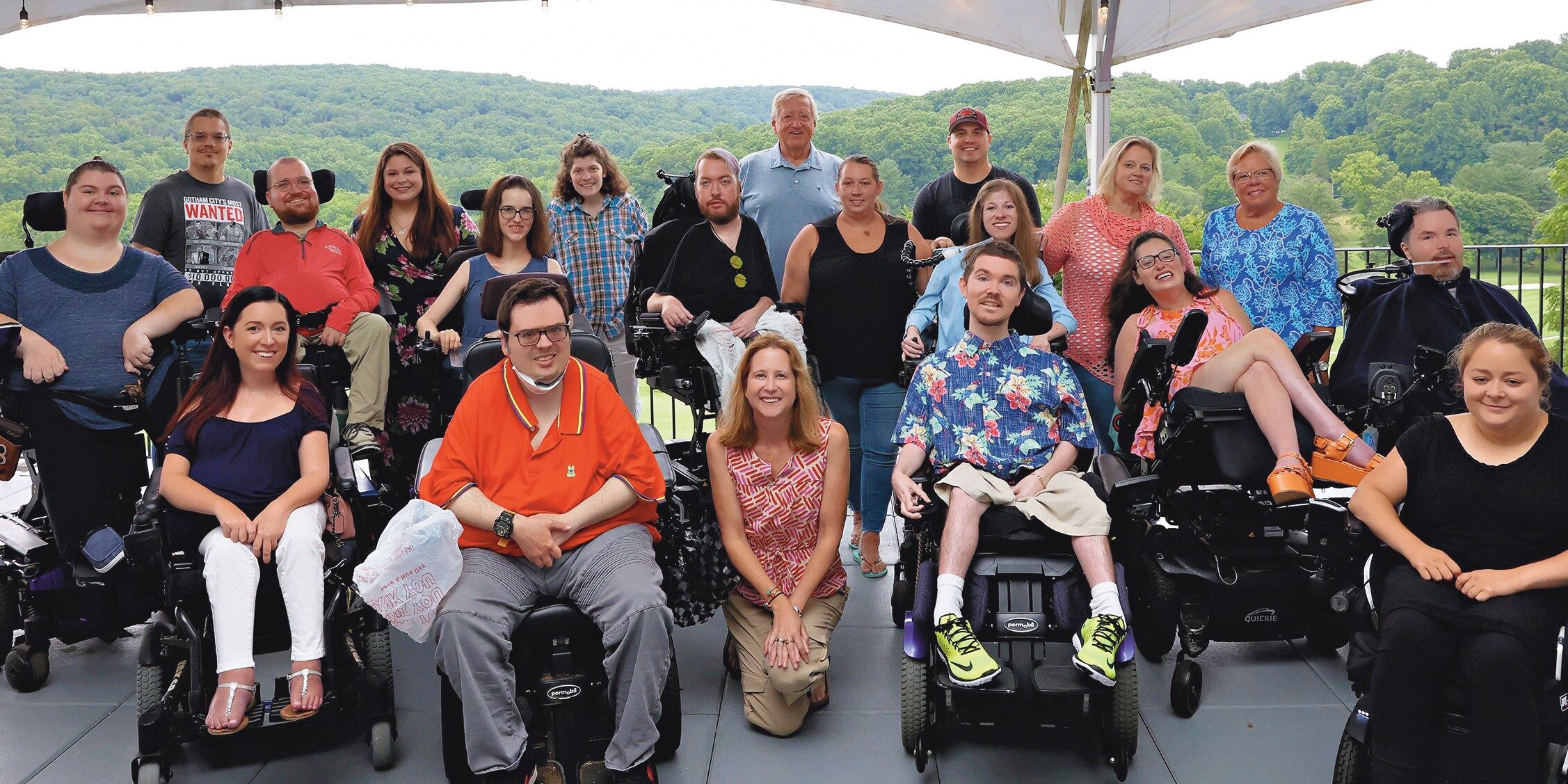
I’m 44 years old, and was officially diagnosed with Friedreich’s ataxia (FA) at age 19, so you might say this article is 25 years in the making! I can tell you with absolute certainty that over these 25 years I’ve learned that “we’re all in this together.”
Can toxic genes be blocked to treat disease?
posted on January 1, 2007 - 3:02pm
Since the 1990s, gene therapy - the insertion of functional genes to compensate for nonfunctional ones - has been the goal of researchers working in several muscular dystrophies, spinal muscular atrophy, Friedreich's ataxia, metabolic muscle diseases and myotubular myopathy.
Caring for the CMT-affected foot
posted on September 1, 2006 - 3:03pm
Diane Lareau, 35, of Linwood, Mass., always knew there was something wrong, but her mother kept telling her she was just pigeon-toed and that putting her shoes on the wrong feet would fix the problem.
It didn’t, and by her late teens, she remembers, her toes were “all bent and just a mess. It looked like a bird’s claw on both feet. I was actually almost walking on the outsides of my ankles.”
Neurotrophin 3 genes strengthened mice with a disease resembling CMT1A
posted on May 18, 2009 - 5:29pm
Zarife Sahenk at Nationwide Children's Hospital and Ohio State University in Columbus, and colleagues, found mice with a disease resembling type 1A Charcot-Marie-Tooth disease (CMT) benefited from a transfer of genes for the neurotrophin 3 protein. CMT1A is caused by a duplication of the PMP22 gene.
Jerry Mendell, who has received many MDA research grants and co-directs the MDA clinic at...
posted on April 1, 2009 - 12:26pm
Story includes research items about: Charcot-Marie-Tooth disease, congenital muscular dystrophy, Duchenne muscular dystrophy, Emery-Dreifuss muscular dystrophy (EDMD), type 1 myotonic muscular dystrophy, and spinal muscular atrophy - including, type 3 SMA and spinal-bulbar muscular atrophy (SBMA, Kennedy disease).
Investigators from Wayne State University found that five genetic subtypes of Charcot-Marie-Tooth disease accounted for more than 99 percent of diagnoses
posted on April 15, 2010 - 3:36pm
Editor's note: This story was updated Feb. 4, 2011, to reflect the availability of a paper and editorial on this subject in Annals of Neurology.
After a single injection, mice with a disease resembling type 1A Charcot-Marie-Tooth showed improved strength and nerve signaling
posted on April 21, 2010 - 3:49pm
Mice with a disorder resembling type 1A Charcot-Marie-Tooth (CMT1A) disease that received a single intramuscular injection of genes for the protein neurotrophin 3 (NT3) showed improvements in grip strength, ability to stay on a rotating rod, and strength of nerve signals, investigators reported April 15, at the 2010 meeting of the American Academy of Neurology, held in Toronto.
From clear-cut endings to complex beginnings
posted on February 1, 2001 - 10:00am
"Clinical medicine is first and foremost the study of the difficult aspects and complexities of diseases. When a patient calls on you, he is under no obligation to have a simple disease just to please you." — Jean-Martin Charcot in a lecture to medical students, 1887
A compound being developed to treat Friedreich's ataxia specifically targets an unwanted molecular brake
posted on September 28, 2009 - 5:00pm
Scientists at the Scripps Research Institute in La Jolla, Calif., and the Repligen Corporation in Waltham, Mass., have identified the precise biochemical brake that limits production of a needed protein in Friedreich's ataxia (FA) and determined that this brake is specifically targeted by an experimental compound being developed to treat this disease. MDA is supporting Repligen to develop this...
Thirty-eight new grants support research in ALS, central core disease, spinal muscular atrophy, muscular dystrophy, and other diseases in MDA's program
posted on August 17, 2010 - 6:39pm
MDA has awarded 38 new research grants totaling more than $14 million and covering more than a dozen neuromuscular diseases.
MDA's Board of Directors met in Los Angeles July 16, where it reviewed and approved the new grants based on recommendations from the MDA Scientific and Medical Advisory Committees. Grants were scored and recommended for approval based on the capabilities of the...