









Quest's annual review of the Americans with Disabilities Act finds new rules being implemented and new suits being filed, as the fight for full inclusion goes on

Beginning in 2012, new or renovated public swimming pools must have sloped entries or lifts. New or altered golf courses must have some accessible holes.
Boat docks must have accessible slips, playgrounds and gyms must have accessible equipment, and amusement park rides must have accessible seats.
These are just a few of the new Americans with Disabilities Act (ADA) regulations for public facilities announced in March 2011 by the U.S. Department of Justice.
The regulations are part of the first major revision of accessibility guidelines since the ADA was passed 21 years ago.
|
To learn more about the new ADA regulations, see the fact sheets put out by the New England ADA Center. See A Closer Look for a sampling of information found in the fact sheets. |
The new rules apply to more than 80,000 state and local government agencies and to more than 7 million public places, including stores, restaurants, shopping malls, libraries, museums, sporting arenas, movie theaters, doctors’ offices, hotels, parking structures, prisons, polling places and emergency preparedness sites.
Organizations covered by the ADA have until March 15, 2012, to comply with the new standards.
The amended regulations also contain many new or expanded nondiscrimination policies intended to clarify the law regarding use of service animals, use of wheelchairs and other power-driven mobility devices, tickets for wheelchair-accessible seating at entertainment venues, reserving and guaranteeing accessible hotel rooms, and other issues.
The compliance date for these policy changes was March 15, 2011, although the hotel industry has until March 15, 2012.
The Department of Justice (DOJ) relies on the public to bring violations to its attention. In most cases, people are encouraged to seek mediation.
However, if the situation rises to the level of general public importance, or if there is a pattern of discrimination, the DOJ may attempt to negotiate a settlement or may file a lawsuit on behalf of the United States, or people can file their own suits in federal court.
“Individuals with neuromuscular diseases or other disabilities should by no means be afraid to be advocates who fight for their civil rights,” says Mario Damiani, an attorney with federal disability policy experience who has Becker muscular dystrophy and who is a former member of MDA’s National Task Force on Public Awareness.
Says Damiani, “when faced with a barrier, individuals with disabilities also have an important opportunity to educate the operators of places of public accommodation and work with them to effect change — which would ideally involve removing the barrier or agreeing upon a reasonable accommodation.”
MDA recently hosted an online information program (webinar) called “Knowing Your Rights and Understanding How the ADA Impacts You.” It featured Robyn Powell, a lawyer and disability rights program manager for the Equal Rights Center in Washington, D.C., and addressed participants’ questions about travel, schools, doctors’ offices and more. It is archived on the MDA website.
New York City is surprisingly behind the curve when it comes to disability access. Fewer than 100 of New York’s 468 subway stations, and only 250 of its 13,000 taxicabs, are wheelchair accessible. Most of the city’s 168,000 sidewalk corners lack curb cuts.
Activists say the problem is not just that it takes time to bring a city as old and big as New York up to current standards. It’s that, even when upgrades and renovations are made, disabled access is ignored or forgotten.
For example, the city’s choice for the “Taxicab of Tomorrow” is not accessible, and its $20 million renovation of the Dyckman Street 1 Station fails to include disabled access.
In October 2010, two disability-rights groups sued the Metropolitan Transit Authority (MTA) over the Dyckman Street station renovation, noting ADA requirements that 20 percent of money spent to upgrade existing facilities must be spent on improving accessibility.
“Access to the subway system is absolutely essential to life in New York City,” stated Sid Wolinsky, the plaintiffs’ lawyer.
Owning a dog that is at least 50 percent pit bull has been illegal in Denver, Colo., since 1989.
Now three people with disabilities who own pit bulls are suing, saying the ban violates their rights under the ADA to have service dogs of their choosing.
The lawsuit highlights the fact that the ADA is intentionally vague about what constitutes a service dog (other than that it has to be a dog — the new rules make it clear that nontraditional service animals aren’t covered).
Authorities in Denver say they may allow pit bulls to stay in the city if their owners produce proof of service-dog training. However, court rulings have held that businesses, local governments and others may not demand proof of a dog’s service training as a condition of allowing the animal to remain with its owner.
The restaurant chain Chipotle Mexican Grill has agreed to lower the height of its counters so people in wheelchairs can see the ingredients and watch their burritos being made.
The change was made after a San Diego man sued the restaurant chain, saying he was being treated differently than other customers who were able to choose the contents and oversee preparation of their burritos.
A trial court initially ruled against the man, saying Chipotle’s policy of showing samples to people in wheelchairs was enough, but the Ninth Circuit Court of Appeals overturned the verdict.
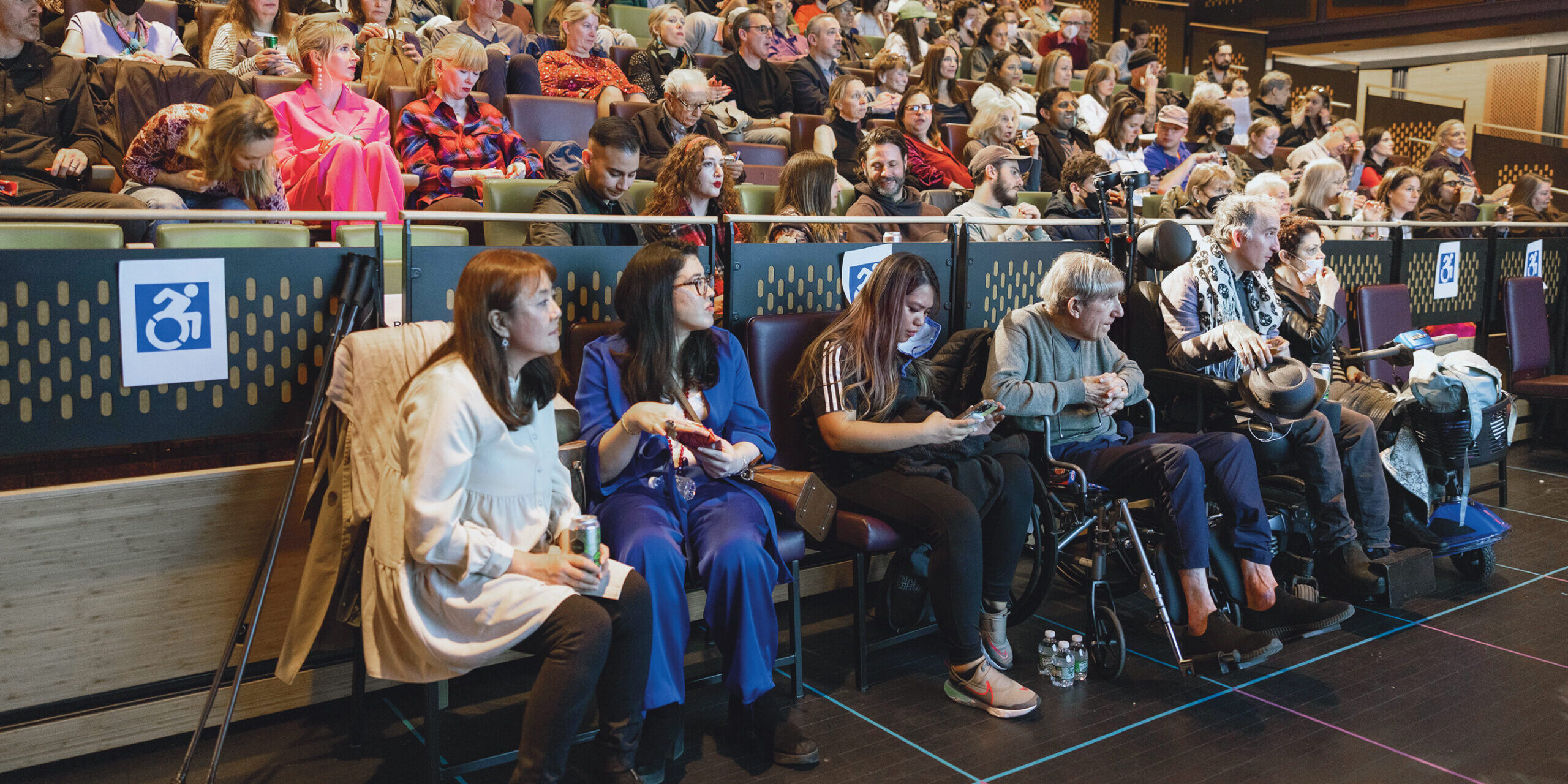
In November, the movie theater chain AMC Entertainment settled a longstanding lawsuit when it agreed to modify its theaters to place wheelchair seating near the middle of the auditorium rather than in the front.
The Department of Justice filed suit in 1999, after receiving complaints that wheelchair seating in AMC theaters often was poorly located, leaving chair users with a bad view.
|
Or maybe an ADA success story to share with others? Email Quest at publications@mda.org. We might feature your story in Quest! |
In mediation, both sides of a dispute sit down with a neutral third-party mediator and work toward a mutually acceptable solution. Attorneys are not required.
Mediation is generally cheaper, faster and less adversarial than going to court. More than three-quarters of ADA complaints filed with the DOJ are resolved through mediation.
A few recent examples:
For more information on the ADA, see InfoQuest.
|
Although the new regulations say only dogs can be service animals, miniature horses also must be allowed (with some restrictions) if they have been individually trained to do work or perform tasks for individuals with disabilities. The regulations distinguish between wheelchairs — which must be permitted in all areas open to pedestrian use — and “other power-driven mobility devices” (OPDMDs), which are mobility devices not specifically designed for people with disabilities but often used by them (such as mobility scooters or the Segway). Tickets for accessible seating at sporting events, concerts, the theater, etc. must be available to purchase during the same hours; during the same stages of ticket sales (pre-sales, promotions, lotteries, wait-lists and general sales) and through the same methods of distribution (phone, in person, Internet, third party) as tickets for nonaccessible seating. This information was excerpted from the Americans with Disabilities Act Title II and Title III Revised Regulations Fact Sheet Series posted by the New England ADA Center. |
Would you like to share your experience with other Quest readers? Please leave a comment below!
|